
4 min read · Research education
What Is L-Carnitine? Research Compound Overview
L-Carnitine is an amino-acid derivative essential to how cells transport fat for energy, studied in metabolic research. Here's the overview.
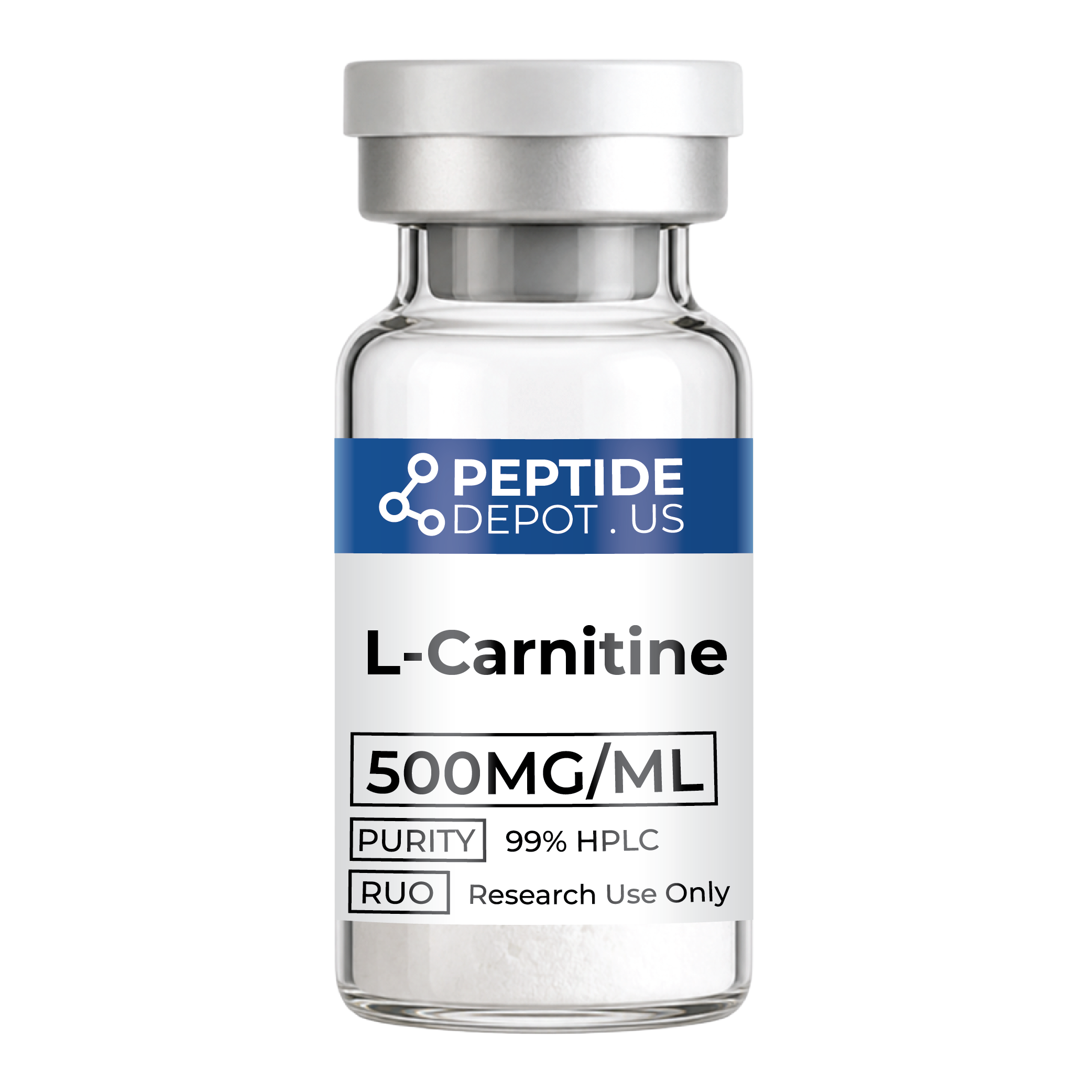
L-Carnitine is a naturally occurring amino-acid derivative, not a peptide. It plays a well-characterized role in cellular energy metabolism and is studied in metabolic research.
What the research examines
L-Carnitine's central function is transporting long-chain fatty acids into the mitochondria, where they are oxidized for energy. In laboratory research it is studied for its role in fatty-acid metabolism, mitochondrial function, and energy-regulation pathways. It is supplied strictly for research use only and is not for human consumption.
Frequently asked questions
What does L-carnitine do in the cell?
It transports long-chain fatty acids into the mitochondria for energy production — a key step studied in fatty-acid metabolism research.
Is L-carnitine a peptide?
No. It is an amino-acid derivative, supplied here for laboratory research use only.
Related research peptides
This article is provided for educational and research-context purposes only and does not constitute medical, dosing, or human-use guidance. All products referenced are sold by Peptide Depot strictly for laboratory research use only and are not for human or veterinary consumption.