
6 min read · Research education
How to Reconstitute Lyophilized Research Peptides
Most research peptides ship as a freeze-dried powder. Here's the general lab procedure for bringing them into solution with bacteriostatic water.
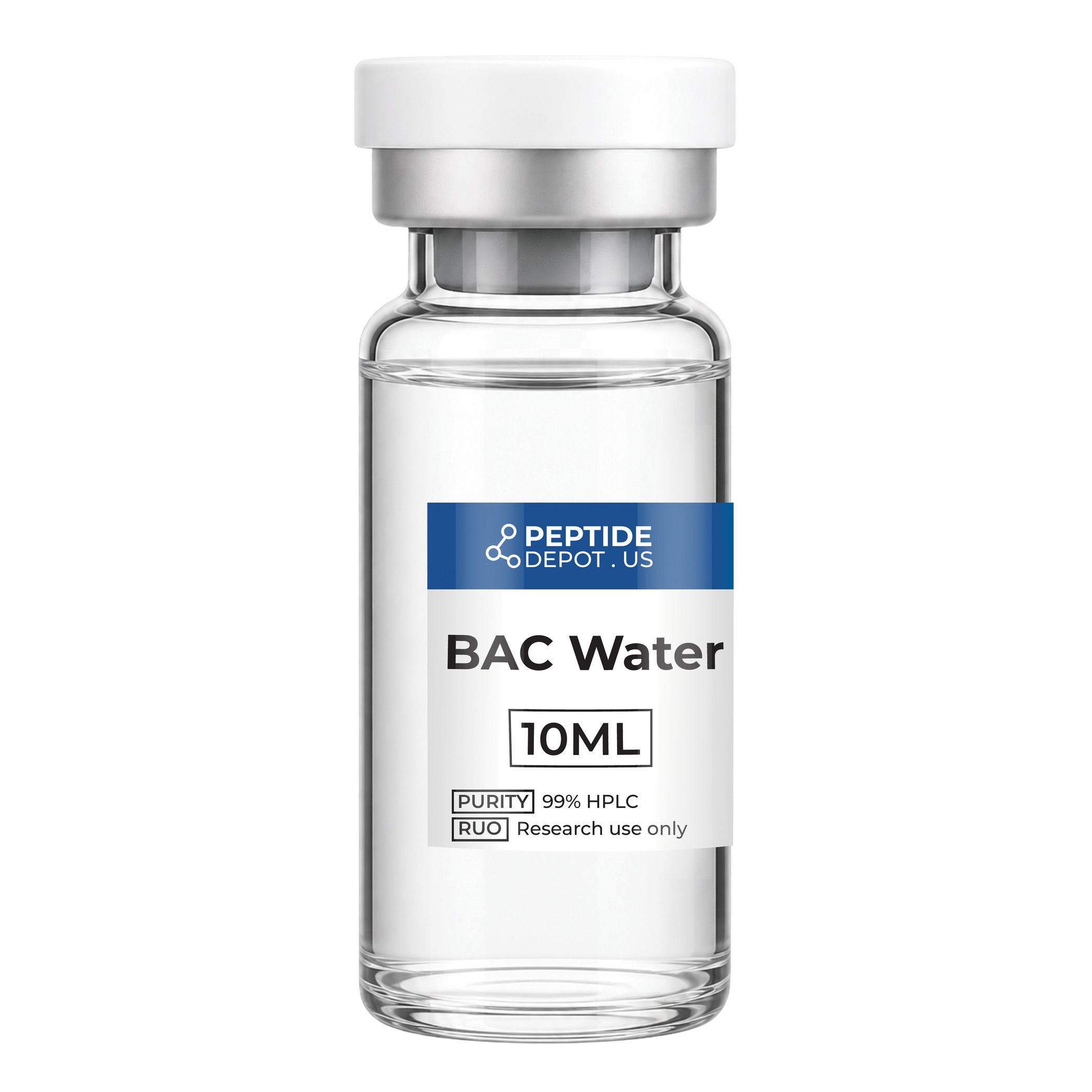
Research peptides are almost always supplied lyophilized — freeze-dried into a stable powder — because dry peptide keeps far longer than peptide in solution. Before a peptide can be used in an experiment it must be reconstituted (dissolved) in an appropriate solvent. The following is a general laboratory procedure, written for in vitro research handling. It is not medical guidance and describes no in vivo or human use.
Typical materials
- The lyophilized peptide vial
- Bacteriostatic water (sterile water with 0.9% benzyl alcohol) as the diluent
- A sterile syringe and needle for transferring diluent
- Alcohol wipes and a clean work surface
General procedure
- Allow the sealed peptide vial to reach room temperature to limit condensation.
- Wipe the rubber stopper of both the peptide vial and the bacteriostatic water vial with an alcohol wipe.
- Draw the chosen volume of bacteriostatic water into the syringe.
- Insert the needle at an angle and let the water run slowly down the inside wall of the peptide vial — aim the stream at the glass, not directly onto the powder, to avoid foaming and shear stress on the peptide.
- Do not shake. Swirl gently or let the vial sit until the powder dissolves fully into a clear solution.
Why bacteriostatic water
Bacteriostatic water contains 0.9% benzyl alcohol, which inhibits microbial growth and allows a reconstituted vial to be stored for a working period under refrigeration. Sterile or distilled water without a bacteriostatic agent is sometimes used when a preservative would interfere with an assay, but it offers no protection against contamination.
Concentration math
Concentration is simply peptide mass divided by diluent volume. For example, reconstituting a 10 mg vial with 2 mL of bacteriostatic water yields 5 mg/mL. Choosing the diluent volume up front lets a researcher hit a target working concentration for an assay.
Storage after reconstitution
Unopened lyophilized peptide is generally kept frozen for long-term stability. Once reconstituted, solutions are typically refrigerated, kept away from light, and used within a limited window because peptides in solution are less stable than the dry powder. See our peptide storage and handling guide for more detail.
Frequently asked questions
What water do you use to reconstitute research peptides?
Bacteriostatic water — sterile water containing 0.9% benzyl alcohol — is the most common diluent for laboratory reconstitution because the preservative limits microbial growth.
Should you shake a peptide vial to dissolve it?
No. Direct the diluent down the vial wall and swirl gently or let it stand. Shaking introduces shear stress and foaming that can degrade the peptide.
Related research peptides
This article is provided for educational and research-context purposes only and does not constitute medical, dosing, or human-use guidance. All products referenced are sold by Peptide Depot strictly for laboratory research use only and are not for human or veterinary consumption.