
5 min read · Research education
What Is BPC-157? A Research Overview
BPC-157 is a synthetic pentadecapeptide derived from a gastric protein fragment. Here's what the research literature describes about its structure and the pathways it's studied in.
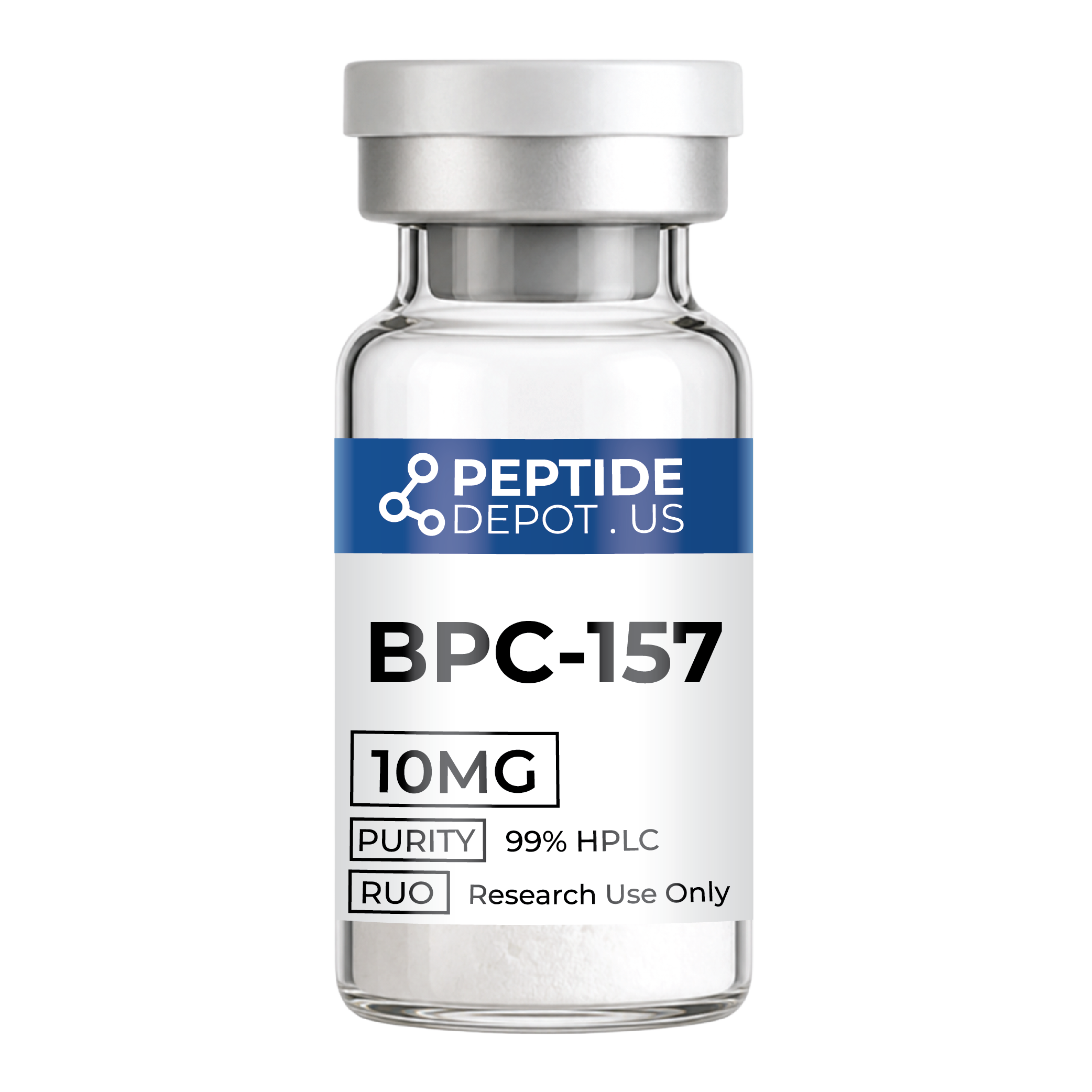
BPC-157 (sometimes written “Body Protection Compound 157”) is a synthetic peptide composed of a 15–amino-acid sequence. The sequence is derived from a fragment of a protein found in gastric juice. In laboratory research it is studied as a stable, water-soluble compound and is typically supplied as a lyophilized (freeze-dried) powder for reconstitution.
Structure and basic properties
BPC-157 is classified as a pentadecapeptide — “penta-deca” meaning fifteen — referring to its chain of fifteen amino acids. It carries the CAS registry number 137525-51-0 and the molecular formula C₆₂H₉₈N₁₆O₂₂. Because it is a defined synthetic sequence rather than an extract, research-grade material can be characterized by mass spectrometry and HPLC for identity and purity.
Research suppliers generally report purity by high-performance liquid chromatography (HPLC), with ≥99% being a common specification for material intended for in vitro work. A certificate of analysis (COA) documents the batch identity, purity, and endotoxin results.
What the research literature examines
Published preclinical and in vitro studies have examined BPC-157 in the context of several cellular pathways. Reported areas of investigation include angiogenesis (the formation of new blood vessels in tissue models), the modulation of inflammatory signaling, and cellular response in wound- and recovery-model systems.
It is important to frame these accurately: this body of work is laboratory and animal-model research. It does not establish safety or efficacy for humans, and BPC-157 is not an approved drug or supplement. References to “healing” or “recovery” in the literature describe outcomes measured in controlled experimental models, not clinical effects.
Common areas of study
- Angiogenic signaling in tissue and cell-culture models
- Inflammatory pathway modulation in vitro
- Cytoprotection and cellular stress-response models
- Combination research alongside TB-500 (thymosin beta-4 fragment)
How it is handled in the lab
As a lyophilized peptide, BPC-157 is reconstituted with bacteriostatic water before use in experiments. Reconstituted solutions are generally kept refrigerated and protected from light, while the unopened lyophilized powder is stored frozen for longer-term stability. See our guide on reconstituting and storing research peptides for the general procedure.
Frequently asked questions
What does BPC-157 stand for?
BPC stands for “Body Protection Compound.” The 157 designates the specific synthetic 15–amino-acid sequence studied in research.
Is BPC-157 a peptide or a protein?
It is a peptide — specifically a pentadecapeptide of 15 amino acids. Proteins are typically much larger chains.
Is BPC-157 approved for human use?
No. BPC-157 is sold strictly for laboratory research use only. It is not an approved drug, food, or dietary supplement and is not intended for human or animal consumption.
Related research peptides
This article is provided for educational and research-context purposes only and does not constitute medical, dosing, or human-use guidance. All products referenced are sold by Peptide Depot strictly for laboratory research use only and are not for human or veterinary consumption.