
BPC-157
CAS #: 137525-51-0
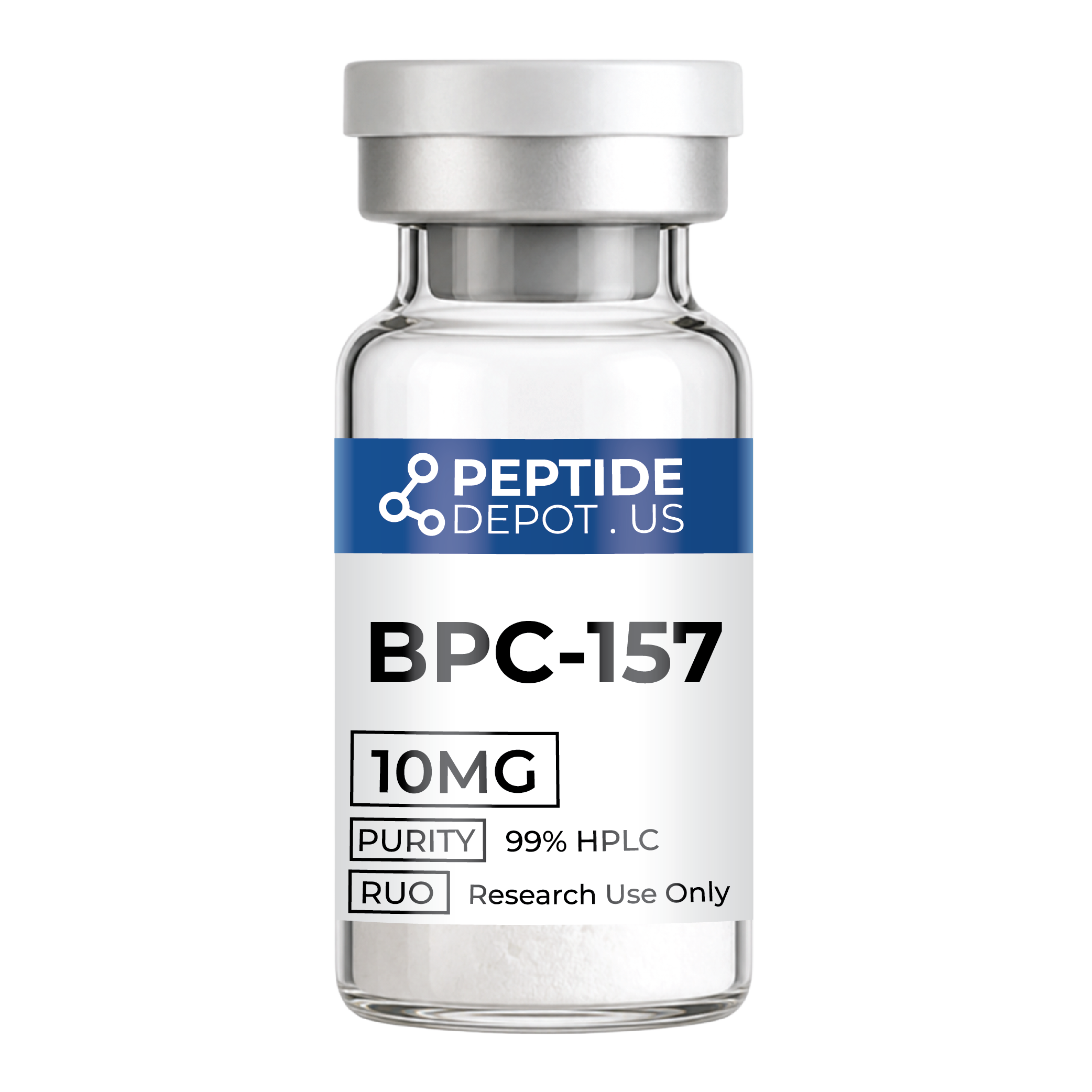
Quantity
BPC-157
Order now, ships today
One-time
Adjust quantity in your cart. Pay via Venmo or Zelle after ordering.
BPC-157
10mg
BPC-157 Overview
BPC-157 (Body Protection Compound-157) is a synthetic peptide consisting of 15 amino acids derived from a protective protein sequence found within human gastric juice. Due to its stability in gastric environments and broad biological activity observed in preclinical models, BPC-157 has become a subject of interest across multiple areas of biomedical research. Researchers have investigated BPC-157 for its interactions with angiogenic signaling pathways, tissue remodeling processes, nitric oxide regulation, and cellular repair mechanisms. Experimental studies have explored its effects in models involving soft tissue injury, gastrointestinal function, vascular biology, and musculoskeletal recovery. BPC-157 remains an investigational research compound and is not approved by the U.S. Food and Drug Administration (FDA) for therapeutic use.
History
BPC-157 originated from research examining naturally occurring protective compounds found within the gastrointestinal tract. Scientists studying gastric cytoprotection identified a protein fragment with notable biological activity and subsequently isolated the pentadecapeptide now known as BPC-157. Research efforts expanded throughout the 1990s and 2000s as investigators explored the peptide's potential influence on tissue repair, angiogenesis, and gastrointestinal integrity. Numerous preclinical studies demonstrated activity across a variety of experimental injury models, leading to growing scientific interest in its mechanisms of action. Today, BPC-157 continues to be studied primarily in laboratory and preclinical settings for its potential role in cellular signaling pathways related to regeneration, vascular function, and tissue remodeling.
BPC-157 Structure
- CAS #
- 137525-51-0
- Molecular Formula
- C₆₂H₉₈N₁₆O₂₂
- Sequence
- Pentadecapeptide — 15 amino acids
Research Findings
BPC-157 is a synthetic pentadecapeptide that has attracted significant scientific attention due to its broad range of biological effects observed in experimental models. Research suggests that the peptide may influence several pathways involved in tissue maintenance and repair, including angiogenic signaling, nitric oxide regulation, growth factor activity, and cellular migration. One of the most frequently studied aspects of BPC-157 involves its potential effects on vascular development and tissue remodeling. Experimental investigations have reported increased expression of angiogenic mediators and enhanced vascularization in various laboratory models. These observations have led researchers to explore its potential role in supporting tissue regeneration processes following injury. In musculoskeletal research, BPC-157 has been examined in models involving tendons, ligaments, skeletal muscle, and connective tissues. Findings from preclinical studies have demonstrated changes in cellular organization, collagen deposition, and tissue remodeling parameters, making it a subject of continued interest within regenerative biology research. The peptide has also been widely investigated for its relationship with gastrointestinal physiology. Early studies focused on its apparent stability within gastric environments and its interactions with pathways associated with mucosal protection and gastrointestinal integrity. Subsequent research expanded into broader investigations involving vascular and inflammatory mechanisms. Additional research has explored interactions between BPC-157 and nitric oxide signaling pathways. Experimental findings suggest the peptide may influence endothelial function, vascular responsiveness, and cellular communication networks associated with tissue adaptation and repair. Despite extensive laboratory and animal research, BPC-157 remains an investigational compound. Further research is necessary to better understand its mechanisms of action, biological effects, safety profile, and potential applications within biomedical science.
Key areas of research:
- Tissue Repair Research
- Angiogenesis Research
- Gastrointestinal Research
- Musculoskeletal Research
- Tendon and Ligament Research
- Vascular Biology
- Nitric Oxide Signaling
- Cellular Regeneration
- Inflammation Research
- Wound Healing Models
References
- The Promoting Effect of Pentadecapeptide BPC-157 on Tendon Healing
- Stable Gastric Pentadecapeptide BPC 157 and Wound Healing
- Pharmacokinetics, Distribution, Metabolism and Excretion of BPC-157
References are provided for research context only and do not constitute medical claims. BPC-157 is sold for laboratory research use only.
Our Process
Lab-made.
Batch-tested.
Step 1
Precision Lyophilization
Manufactured in a controlled U.S. facility under strict compounding standards.
Step 2
Verified Purity
Every batch third-party tested with HPLC and mass spectrometry.

Step 3
Same-Day Fulfillment
Orders dispatched same-day from our U.S. facility.
Real humans, real fast
Text us. Our team
replies in minutes.
Questions about a product, an order, or a COA? Text the team and you'll get a real person in under five minutes during business hours.
Text support coming soonSample of how our team responds. Average reply time during business hours: under 5 minutes.