
5 min read · Research education
What Is MOTS-c? Mitochondrial Peptide Research Overview
MOTS-c is an unusual peptide encoded not in the cell's nucleus but in the mitochondrial genome. Here's what makes it a focus of metabolic research.
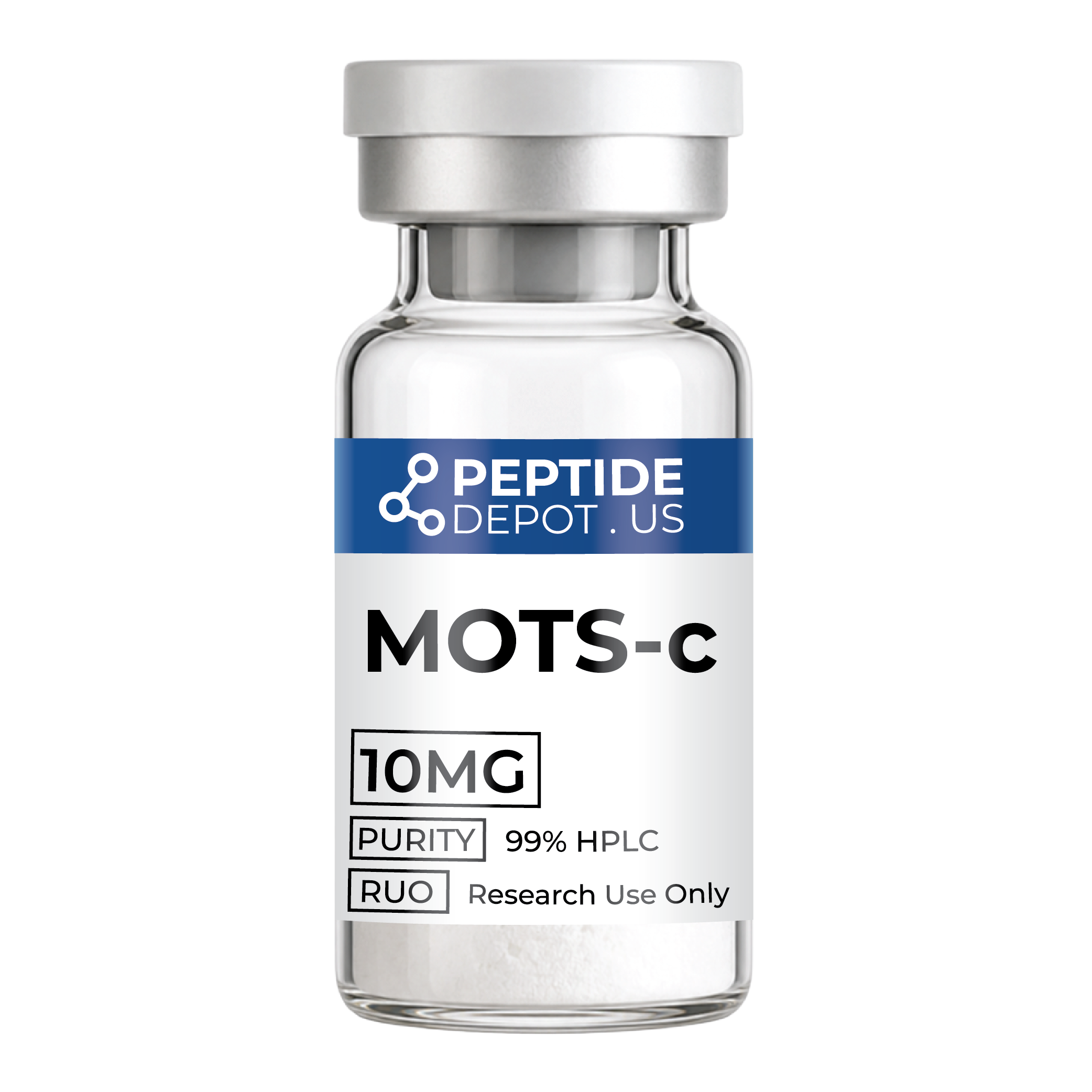
MOTS-c is a mitochondrial-derived peptide (MDP) — a short peptide of 16 amino acids whose sequence is encoded within the mitochondrial genome rather than the nucleus. This unusual origin is part of why it has become a focus of metabolic and cellular research.
What makes it distinctive
Most peptides are encoded by nuclear DNA. MOTS-c is encoded in a region of the mitochondrial 12S rRNA gene, making it one of a small family of mitochondrial-derived peptides. Researchers study these peptides as potential signaling molecules between the mitochondria and the rest of the cell.
What the research examines
In laboratory research, MOTS-c is studied for its role in cellular metabolism and mitochondrial signaling pathways, including its reported interaction with metabolic regulators such as AMPK. It appears frequently in research on metabolic homeostasis. MOTS-c is supplied for research use only and is not for human consumption.
Frequently asked questions
What does MOTS-c stand for?
MOTS-c stands for “mitochondrial open reading frame of the 12S rRNA type-c” — reflecting that it's encoded within the mitochondrial genome.
Why is MOTS-c unusual?
Unlike most peptides, it's encoded by mitochondrial DNA rather than nuclear DNA, making it a mitochondrial-derived peptide studied as a cellular signaling molecule.
Related research peptides


This article is provided for educational and research-context purposes only and does not constitute medical, dosing, or human-use guidance. All products referenced are sold by Peptide Depot strictly for laboratory research use only and are not for human or veterinary consumption.