
5 min read · Research education
What Is NAD+? Coenzyme Research Overview
NAD+ is a coenzyme found in every living cell and a major focus of metabolism and longevity research. Here's what it is and what's studied.
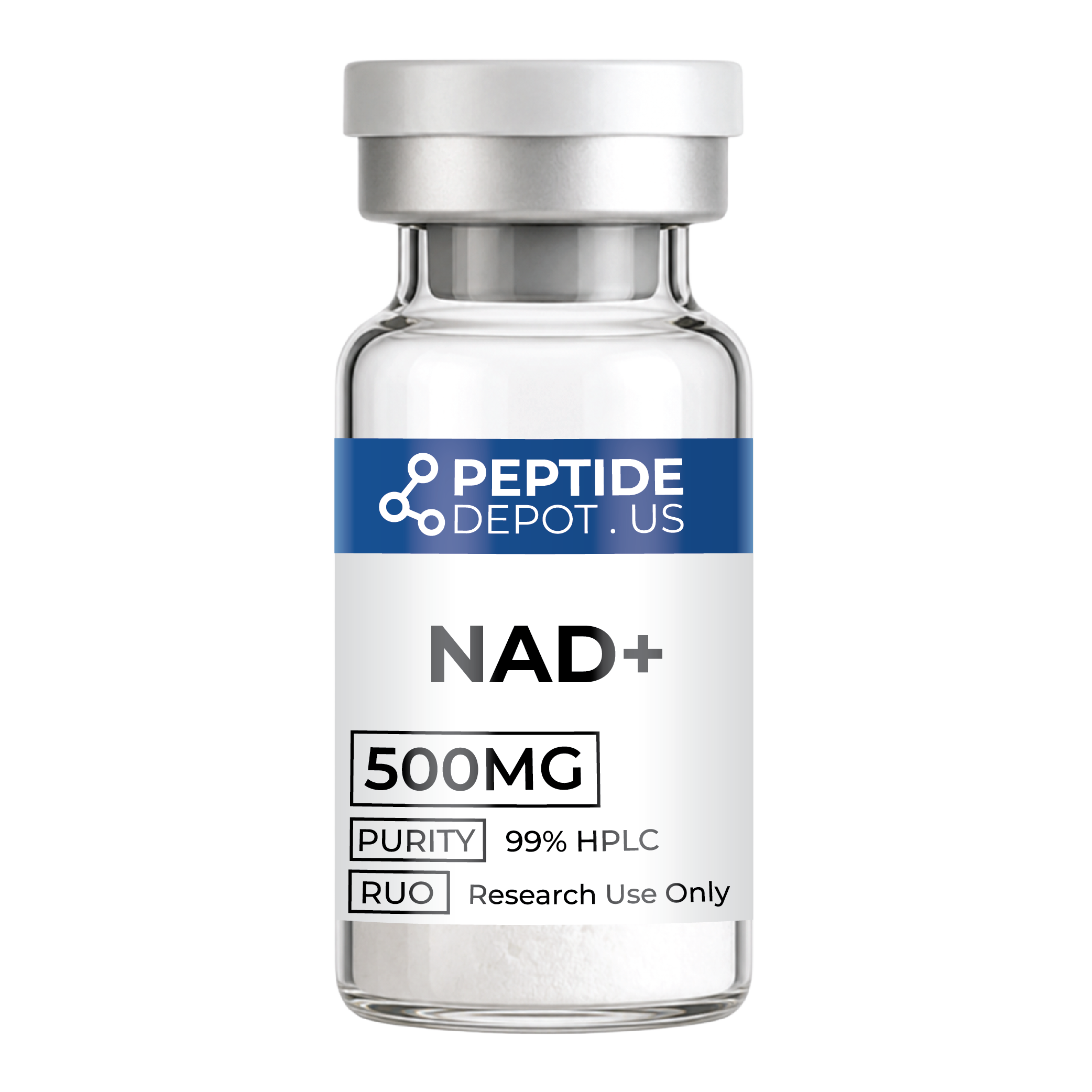
NAD+ (nicotinamide adenine dinucleotide) is a coenzyme present in every living cell, not a peptide — but it's a frequent subject of cellular research and is supplied alongside research peptides for laboratory work. It carries the CAS number 53-84-9. NAD+ is central to the redox reactions that power cellular metabolism.
Why it matters in cell biology
NAD+ acts as an electron carrier in the reactions that convert nutrients into usable energy, cycling between its oxidized (NAD+) and reduced (NADH) forms. Beyond energy metabolism, it is a required co-substrate for enzymes such as the sirtuins and PARPs, linking it to research on DNA repair, cellular-stress regulation, and mitochondrial function.
What the research examines
Because cellular NAD+ levels decline with age, it is heavily studied in longevity and metabolic research models — investigating mitochondrial function, sirtuin activity, and cellular-health markers in vitro. This work is laboratory research; NAD+ here is supplied for research use only, not for human consumption.
Frequently asked questions
Is NAD+ a peptide?
No. NAD+ is a coenzyme (a dinucleotide), not a peptide. It's studied in cellular metabolism and longevity research and supplied for laboratory use.
What does NAD+ do in the cell?
It serves as an electron carrier in energy metabolism and as a co-substrate for enzymes like sirtuins and PARPs involved in DNA repair and stress response.
Related research peptides
This article is provided for educational and research-context purposes only and does not constitute medical, dosing, or human-use guidance. All products referenced are sold by Peptide Depot strictly for laboratory research use only and are not for human or veterinary consumption.