
4 min read · Research education
What Is PT-141? Melanocortin Research Peptide Overview
PT-141 is a melanocortin-receptor agonist peptide studied for receptor signaling in research. Here's a research-framed overview.
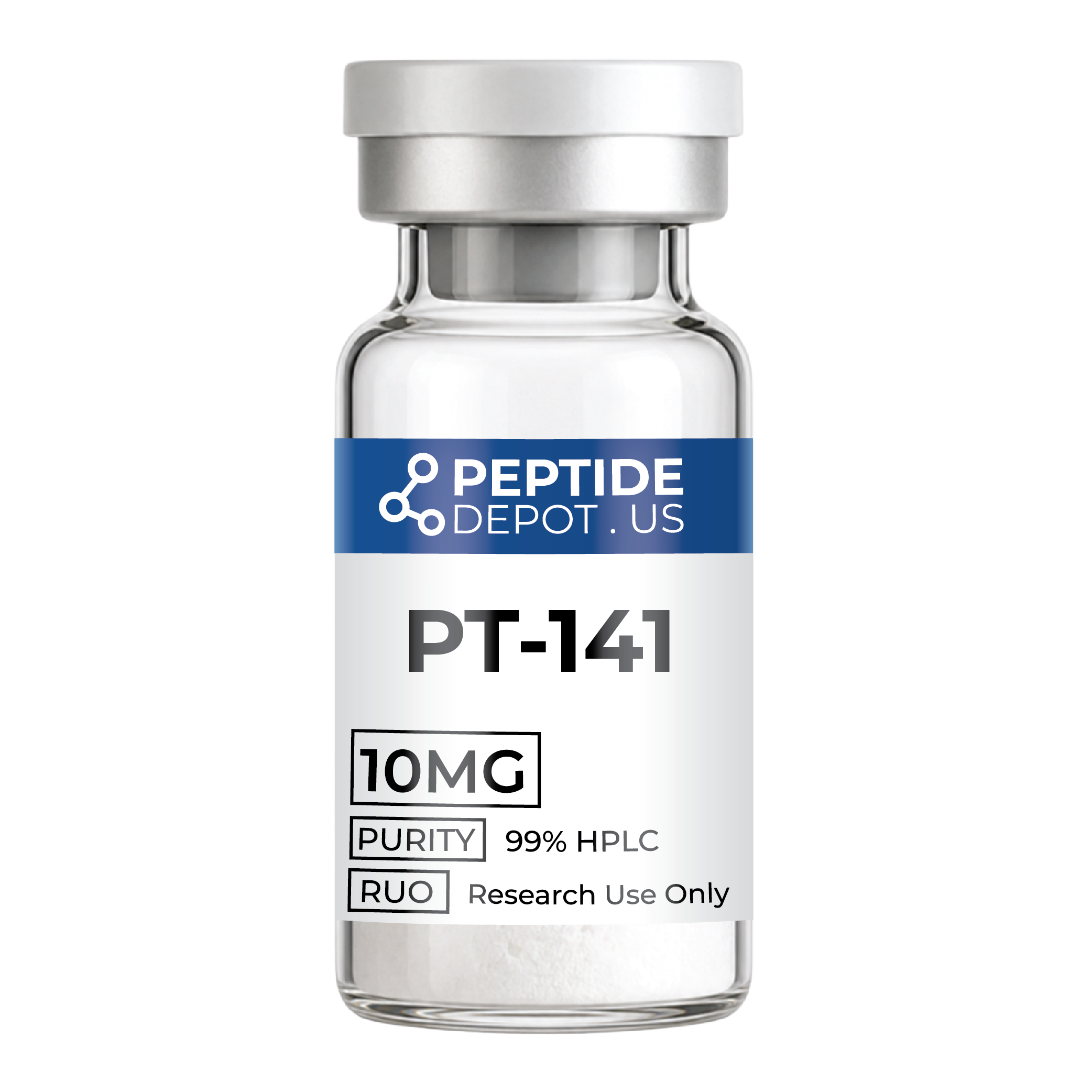
PT-141, also known as bremelanotide, is a synthetic peptide and a metabolite of the melanocortin analog Melanotan II. It is studied in research as an agonist of the melanocortin receptor family, with a receptor profile distinct from MT2.
What the research examines
In laboratory research, PT-141 is studied for its activity at melanocortin receptors and the associated receptor-signaling pathways in controlled models. Nothing here describes any human or clinical use; PT-141 is supplied strictly for research use only and is not for human consumption.
Frequently asked questions
What is PT-141 also called?
PT-141 is also known as bremelanotide; it is a melanocortin-receptor agonist studied in research.
How is PT-141 related to Melanotan II?
PT-141 is a metabolite of Melanotan II with a distinct melanocortin-receptor profile. Both are supplied for research use only.
Related research peptides
This article is provided for educational and research-context purposes only and does not constitute medical, dosing, or human-use guidance. All products referenced are sold by Peptide Depot strictly for laboratory research use only and are not for human or veterinary consumption.