
5 min read · Research education
What Is Sermorelin? GHRH Analog Research Overview
Sermorelin is a synthetic GHRH analog representing the active fragment of GHRH, studied in endocrine research. Here's the overview.
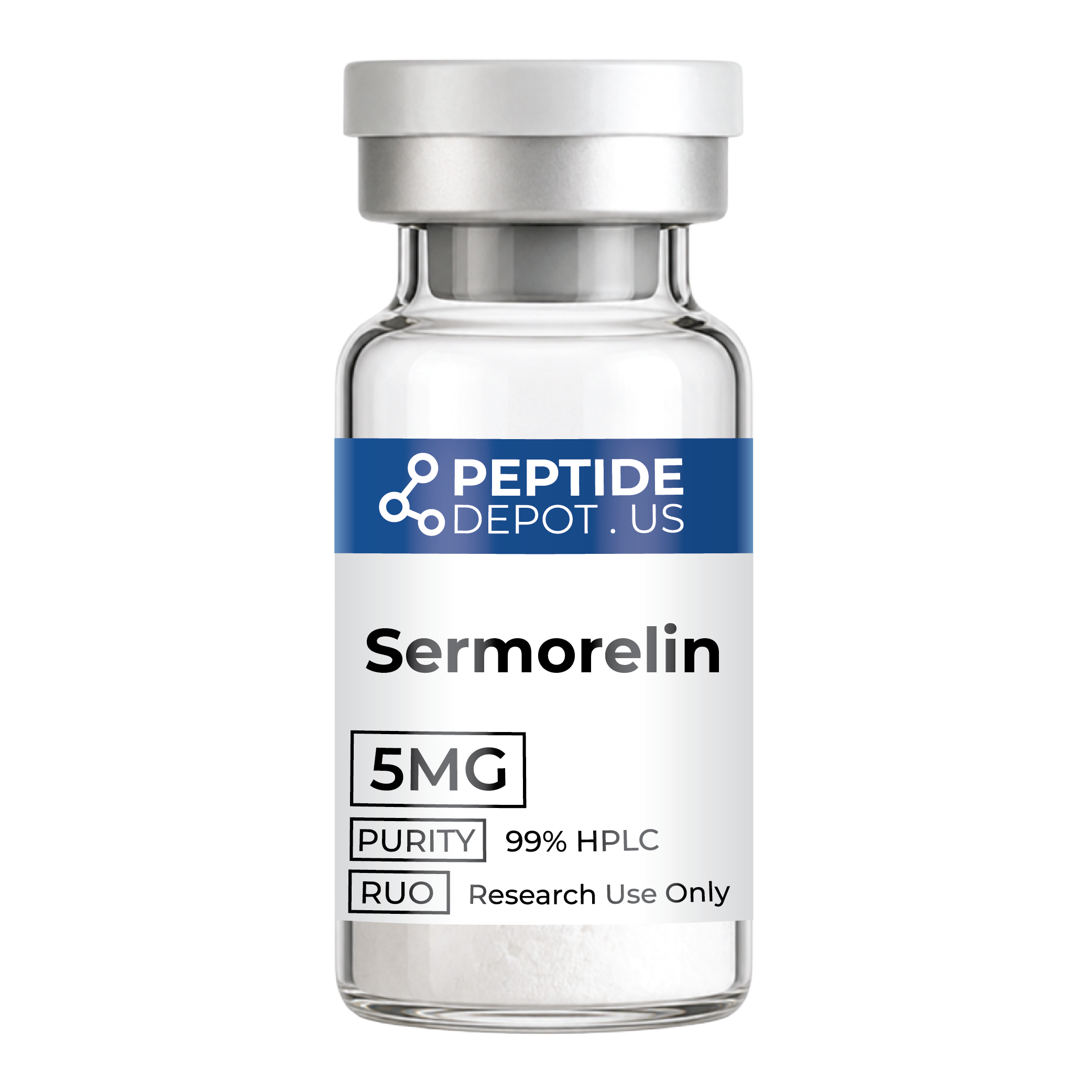
Sermorelin is a synthetic peptide that functions as an analog of growth hormone–releasing hormone (GHRH). It corresponds to the first 29 amino acids of GHRH — the GHRH(1–29) fragment — which is the shortest sequence that retains the hormone's biological activity. It is supplied as a lyophilized powder for laboratory research.
What the research examines
In laboratory research, sermorelin is studied for its ability to stimulate the pituitary signaling pathway and its role in growth-hormone dynamics. Because it represents the minimal active GHRH sequence, it's a common reference compound in endocrine-signaling research alongside other GHRH analogs such as tesamorelin and CJC-1295.
Form and handling
Sermorelin is reconstituted with bacteriostatic water before use and characterized for identity and purity. It is supplied strictly for research use only and is not intended for human or veterinary consumption.
Frequently asked questions
What is sermorelin?
Sermorelin is a synthetic GHRH(1–29) analog — the shortest fragment of growth hormone–releasing hormone that retains biological activity — studied in endocrine research.
How is sermorelin different from CJC-1295?
Both are GHRH analogs studied in research. CJC-1295 is modified for extended activity, while sermorelin represents the minimal active GHRH sequence; researchers compare them by duration of receptor activity.
Related research peptides
This article is provided for educational and research-context purposes only and does not constitute medical, dosing, or human-use guidance. All products referenced are sold by Peptide Depot strictly for laboratory research use only and are not for human or veterinary consumption.