
5 min read · Research education
What Is Tesamorelin? GHRH Analog Research Overview
Tesamorelin is a stabilized synthetic GHRH analog studied in endocrine research. Here's its structure and the pathways researchers investigate.
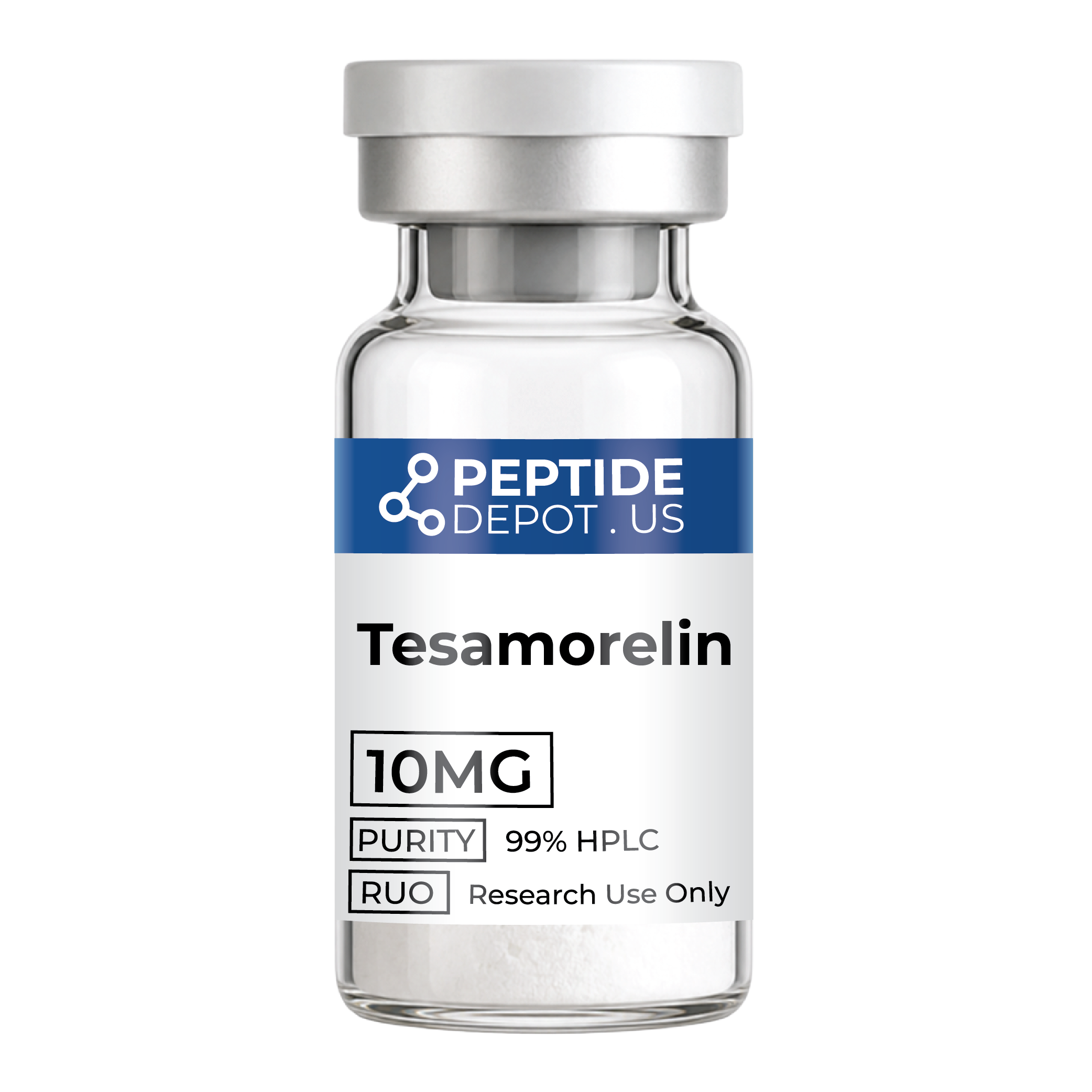
Tesamorelin is a synthetic peptide that functions as an analog of growth hormone–releasing hormone (GHRH). It is a stabilized form of the GHRH sequence, designed to resist rapid breakdown, and carries the CAS number 901758-09-6. It is supplied as a lyophilized powder for laboratory research.
How GHRH analogs are studied
GHRH is the hormone that signals the pituitary gland to release growth hormone. Synthetic GHRH analogs like tesamorelin are studied in research for their ability to stimulate this growth-hormone secretion pathway, making them useful tools for investigating endocrine signaling and the GH axis in controlled models.
What the research examines
In laboratory research, tesamorelin is studied in the context of endocrine signaling and metabolic and lipid-related pathways. It belongs to the same broad GHRH-analog family as sermorelin and CJC-1295, which researchers often compare. Tesamorelin is supplied strictly for research use only and is not intended for human consumption.
Frequently asked questions
What is a GHRH analog?
A GHRH analog is a synthetic peptide modeled on growth hormone–releasing hormone, studied for its ability to stimulate the pituitary's growth-hormone secretion pathway.
How does tesamorelin differ from sermorelin?
Both are GHRH analogs studied in endocrine research. Tesamorelin is a stabilized form designed to resist rapid degradation; researchers compare such analogs by stability and receptor activity.
Related research peptides
This article is provided for educational and research-context purposes only and does not constitute medical, dosing, or human-use guidance. All products referenced are sold by Peptide Depot strictly for laboratory research use only and are not for human or veterinary consumption.