
6 min read · Research education
BPC-157 vs. TB-500: Comparing Two Research Peptides
BPC-157 and TB-500 are frequently studied together, but they come from different sources and are investigated for different pathways. Here's how they compare.
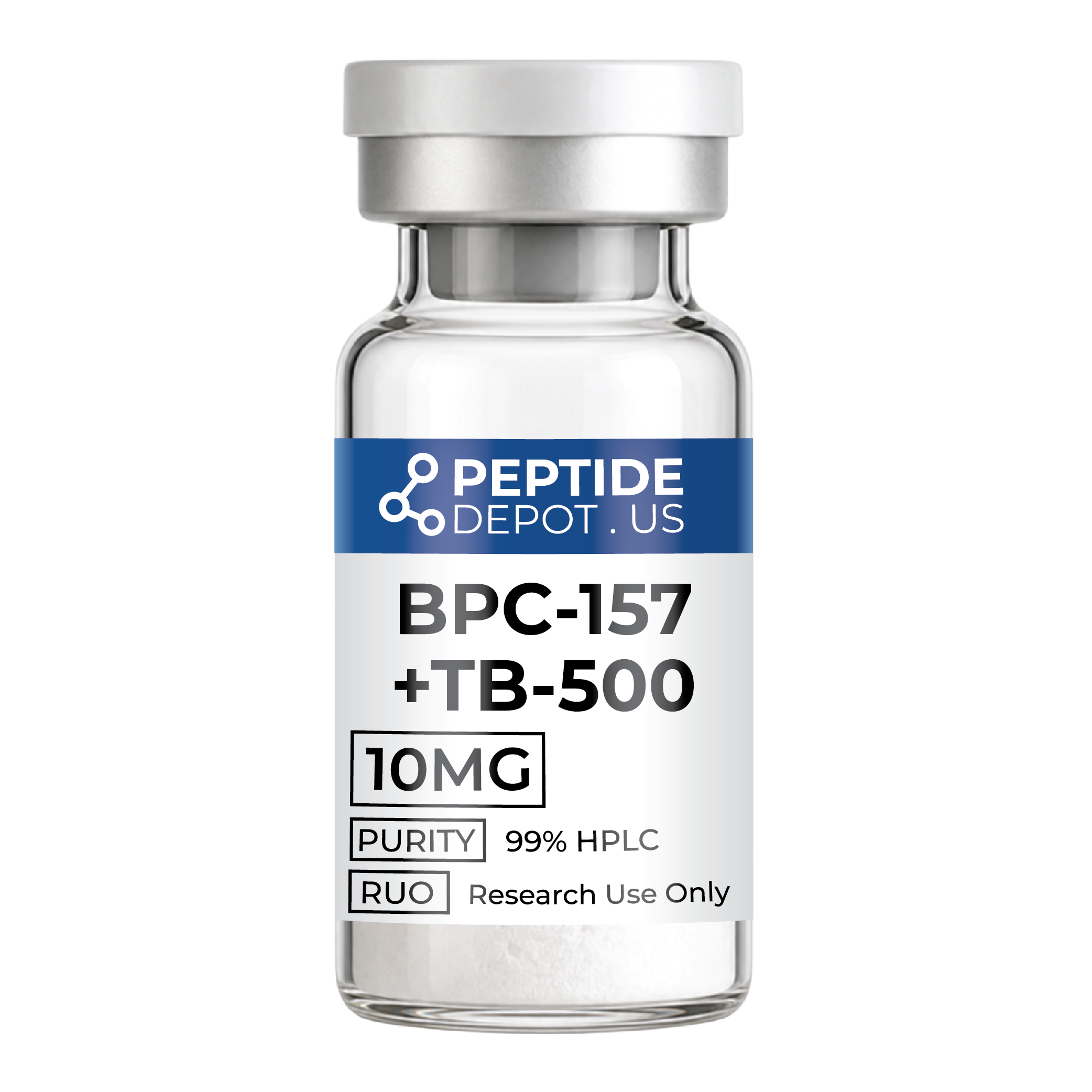
BPC-157 and TB-500 are two of the most frequently referenced research peptides, and they are often studied as a combination. They are, however, distinct compounds with different origins and different mechanisms under investigation.
Origins
BPC-157 is a synthetic 15–amino-acid sequence derived from a fragment of a gastric protein. TB-500 is a synthetic peptide corresponding to a biologically active region of thymosin beta-4 (Tβ4), a naturally occurring protein involved in cytoskeletal organization.
Structure at a glance
- BPC-157 — pentadecapeptide, 15 amino acids, CAS 137525-51-0, formula C₆₂H₉₈N₁₆O₂₂
- TB-500 — synthetic thymosin beta-4 fragment, CAS 77591-33-4, formula C₂₁₂H₃₅₀N₅₆O₇₈S
Pathways studied
Research on BPC-157 has focused on angiogenic and inflammatory signaling and cytoprotection in tissue-model systems. Research on TB-500 has centered on actin regulation and cell migration — thymosin beta-4 is well known in cell biology for sequestering G-actin and influencing cytoskeletal dynamics, which is why TB-500 is studied in cell-migration and wound-model contexts.
Because the two are investigated for partly complementary pathways (vascular/inflammatory signaling for BPC-157, cytoskeletal/migration dynamics for TB-500), they are commonly combined in research blends to study potential additive effects in controlled models.
The combination blend
A BPC-157 + TB-500 blend supplies both peptides in a single research vial. As with any blend, characterization is per-component, and researchers should consult the certificate of analysis for the identity and purity of each constituent. The blend is, like its components, supplied for in vitro laboratory research only.
Frequently asked questions
Are BPC-157 and TB-500 the same thing?
No. BPC-157 is derived from a gastric protein fragment, while TB-500 is a synthetic fragment of thymosin beta-4. They have different sequences and are studied for different cellular pathways.
Why are BPC-157 and TB-500 studied together?
They are investigated for partly complementary pathways, so researchers combine them to study potential additive effects in controlled in vitro models.
Related research peptides
This article is provided for educational and research-context purposes only and does not constitute medical, dosing, or human-use guidance. All products referenced are sold by Peptide Depot strictly for laboratory research use only and are not for human or veterinary consumption.